Welcome to Episode #128:
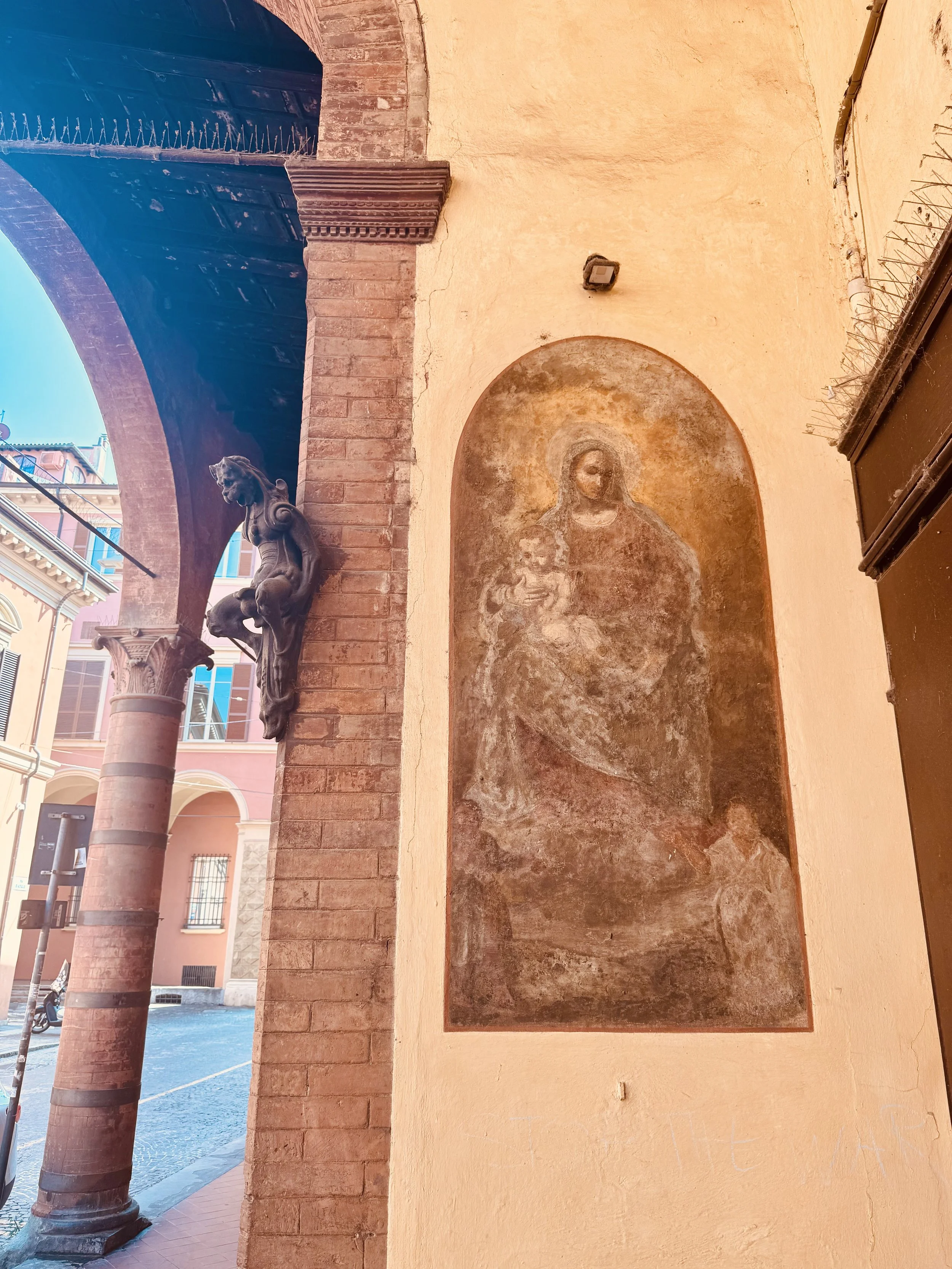
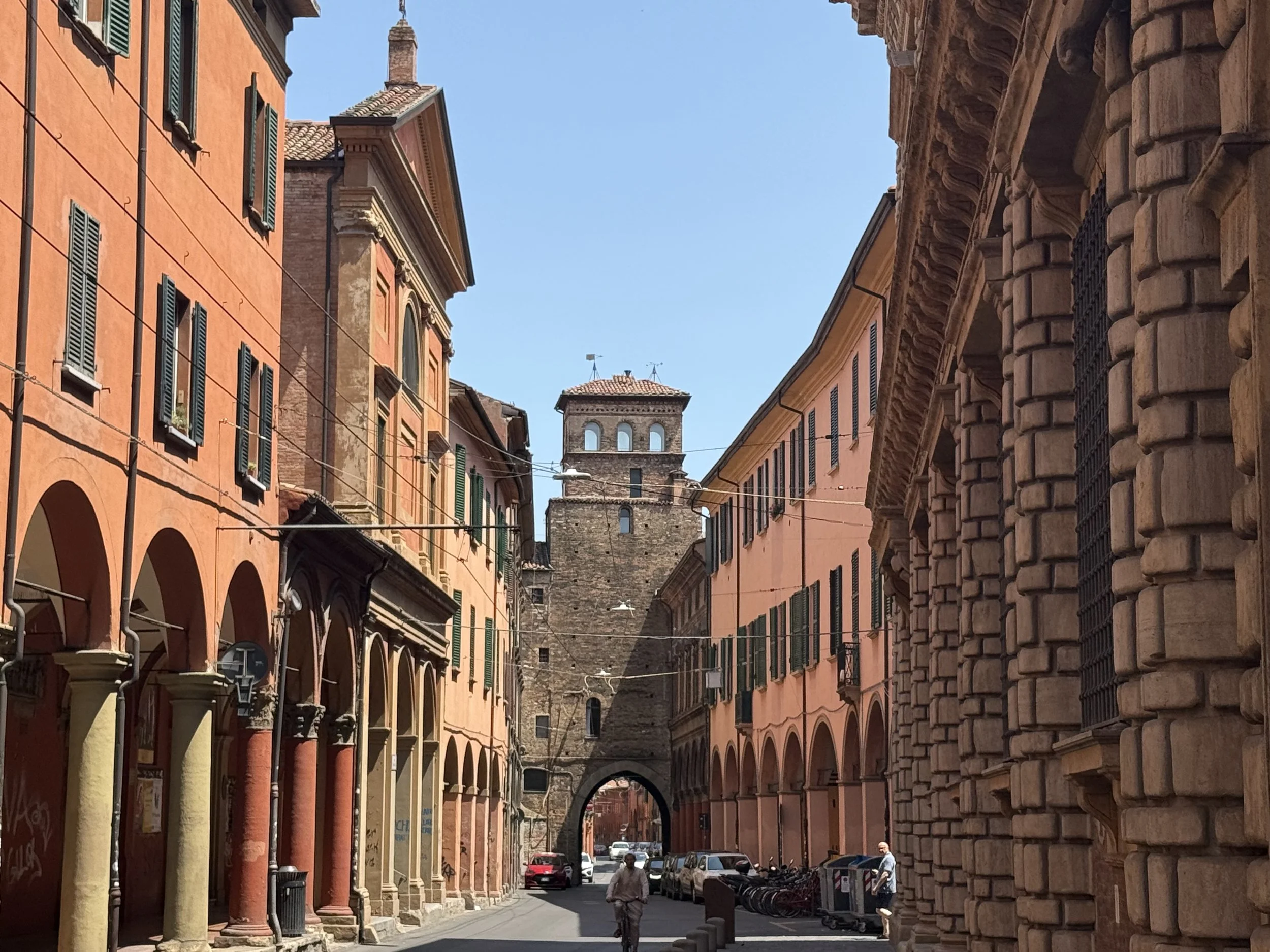
Bologna is one of those places that has that quintessential Italian feel. A medieval city with wonderful heritage and a place where tradition and conviviality are maintained. Many people love to visit for the food and there is a lot to say about the glories of the table in Bologna. I went there for art, food and wine and found myself lured by the beautiful porticoes that dominate the city and a significant visit to Santa Caterina. There is UNESCO World Heritage sites and al fresco ambience like no other. I often wonder why more people don’t visit this city. It has so much to offer in terms of the magic of travel.

On my previous visit in 2022 I used Bologna as a base to travel to Ravenna to see the Basilica of San Vitale (on the Mosaic Trail of Ravenna), so that is an option if you don’t mind a train trip across the countryside of Emilia Romagna. I also traveled from Bologna to my next stop in Parma, Emilia Romagna, another world northern city that has that beautiful magic of the north of Italy.
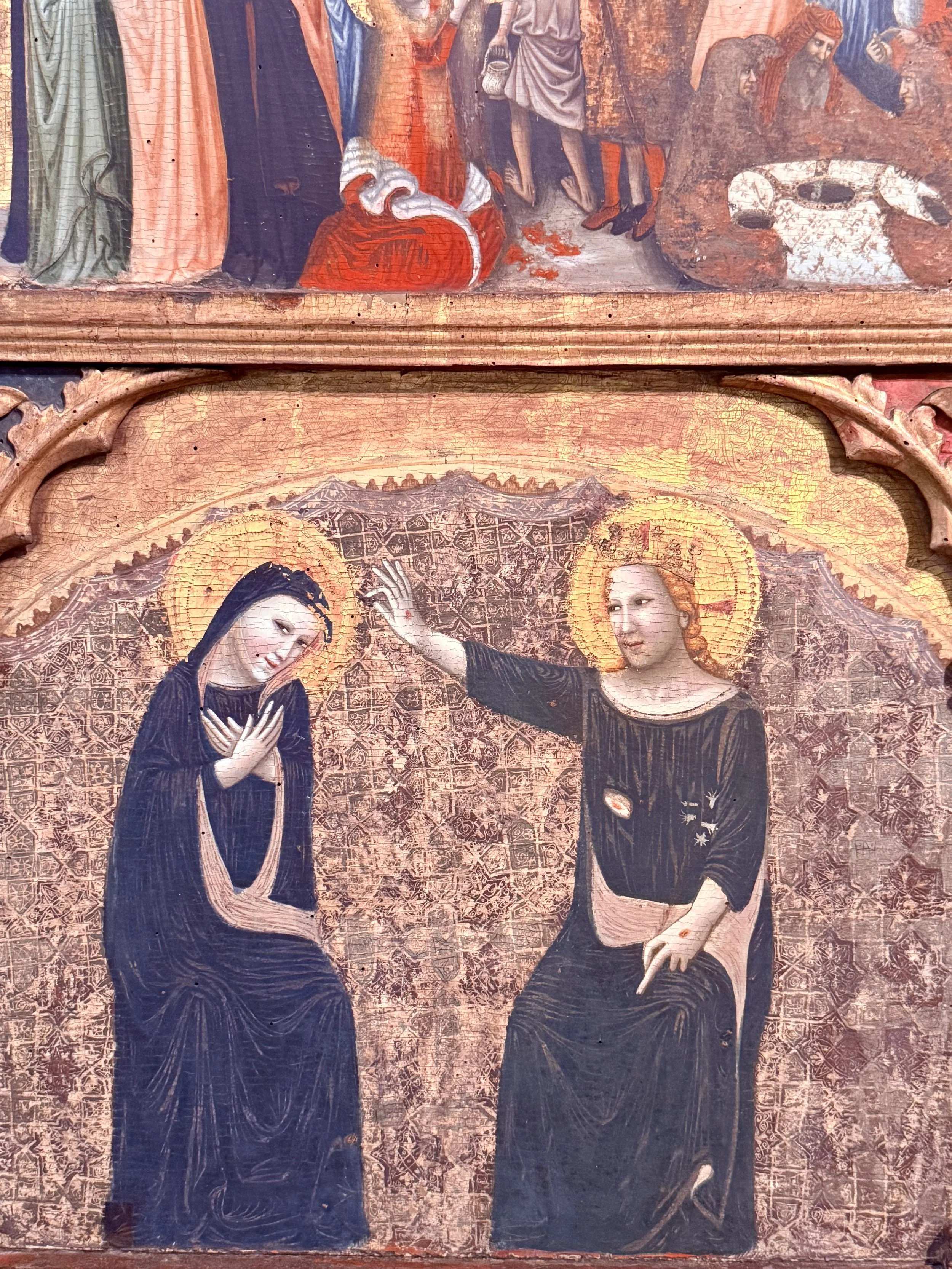
Maestro dei Polittici di Bologna (Pseudo Jacopino), Politoco, Polytych
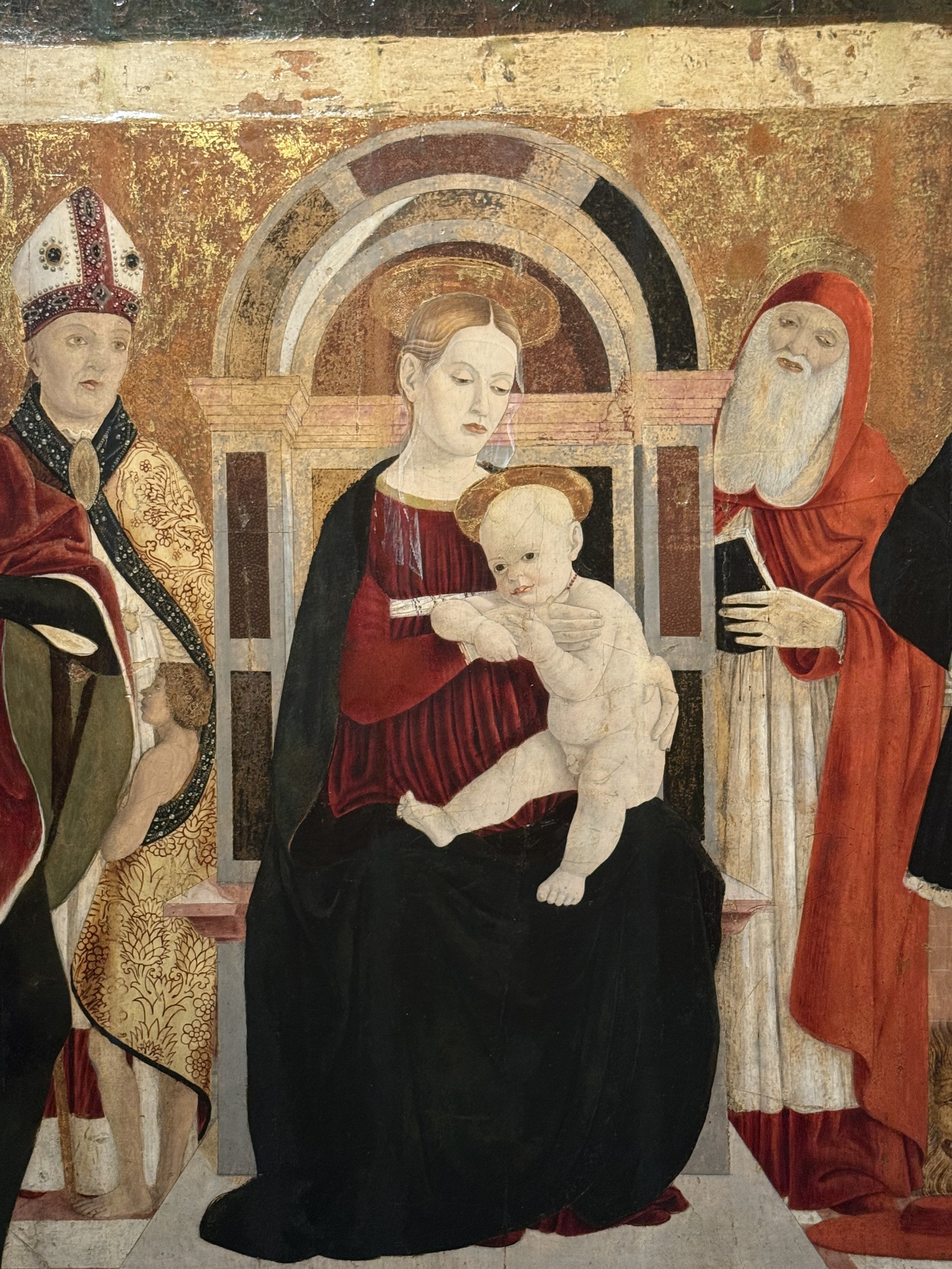
This year I went to Bologna and visited the Pinacoteca Nazionale di Bologna - there is much to see…
My favourites by Elisabetta Sirani ‘Sibela’, 1660,
Francesco Francia, ‘Madonna con il Bambino in torn e i Santi Paolo, Francesco e Giovannino, 1495…
Maestro della Crocefissione Campana (Gia Pseudo Jacopino) - San Giacomo all battaglia di Calvino, 1315-1320
Simone di Filippo detto “Dei Crocifissi” - Sant’Elena in adorazione della Croce e una monaca Tela, 1375-1380
Vitale da Bologna ‘San Giorgio e il drago’, 1330-1335
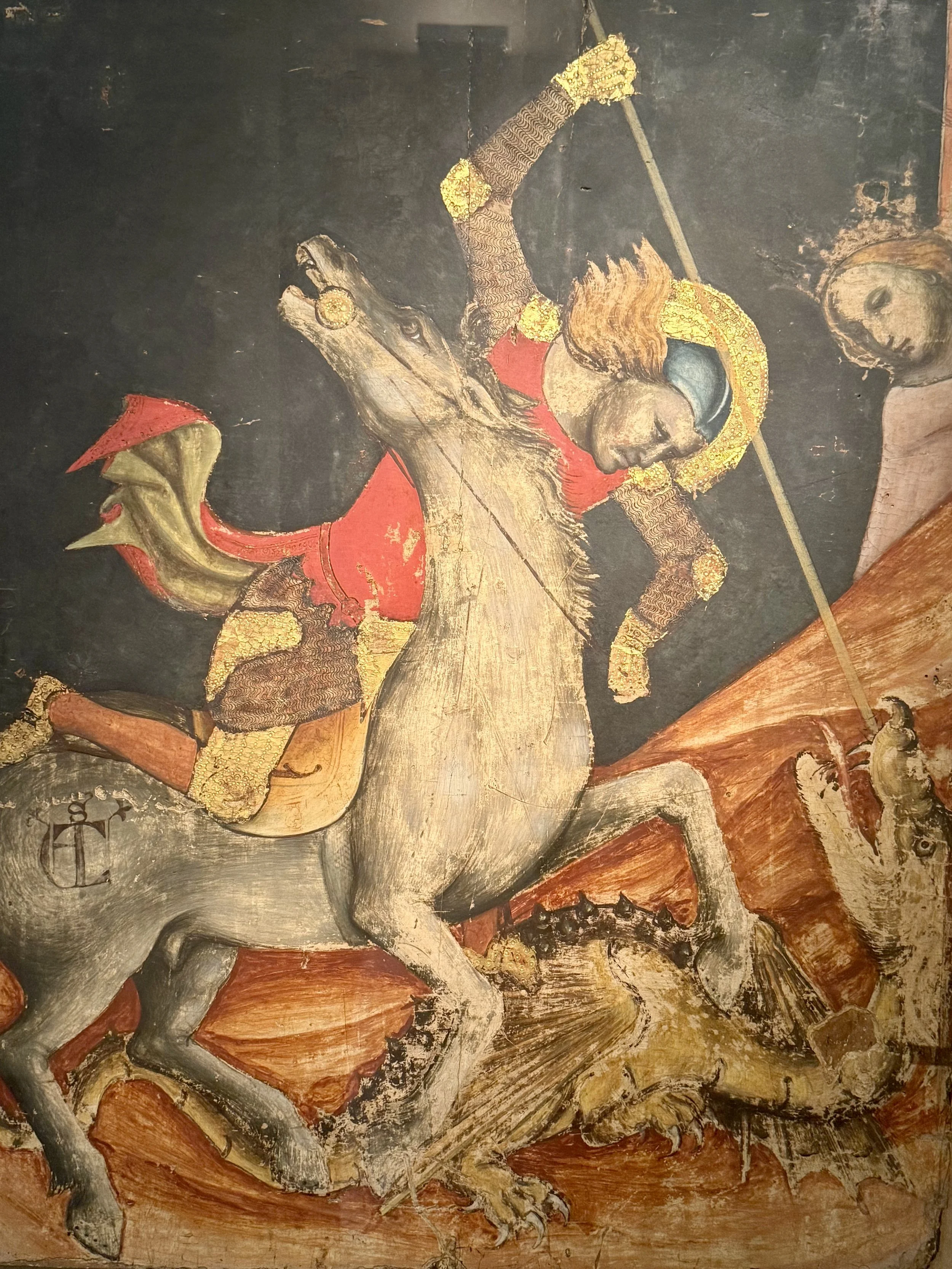
Vitale da Bologna ‘San Giorgio e il drago’, 1330-1335
I also enjoyed wandering close by to the University and taking in the ambience of the Unesco World Heritage porticos. I had a wonderful al fresco lunch in a perfect setting at Bura delle Campane. It was tranquil and ambient, and a tour guide brought her small group to lunch so that is always a good sign. I found this restaurant walking back from seeing the art at the Pinacoteca, on my way to the centro storico.
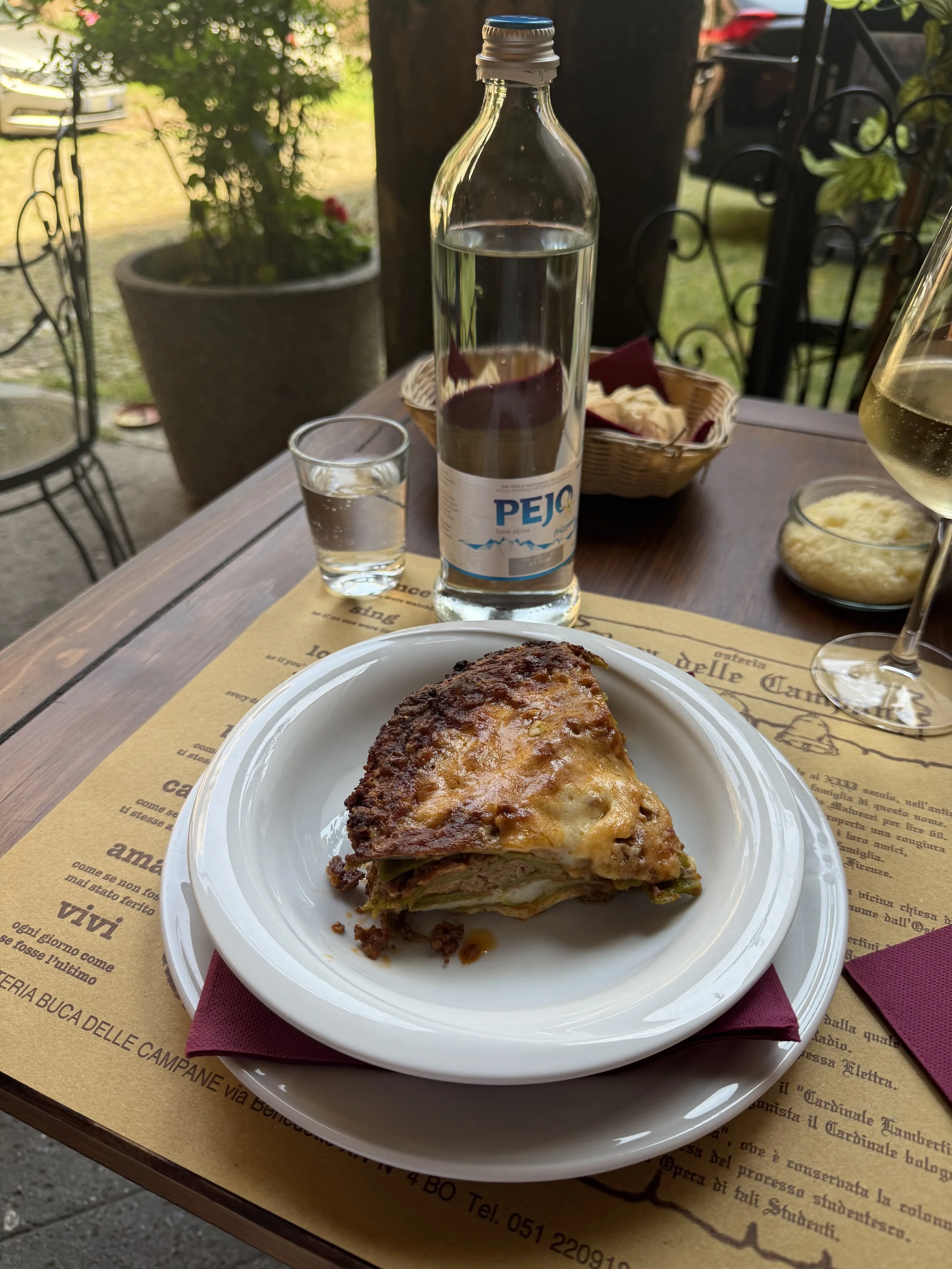
Do try the iconic lasagne, the tagliatelle all ragu and the tortellini in brodo, they are all classic dishes of the region, Emilia Romagna. There are wonderful wines to try if this is your thing. This is the land of Lambrusco, Pignoletto, Trebbiano, Sangiovese and Barbara grapes. Beautiful red wines can be paired with rich ragu style pastas make for a sumptuous dining experience and the view of a tower or two is nice in the medieval centre of Bologna.
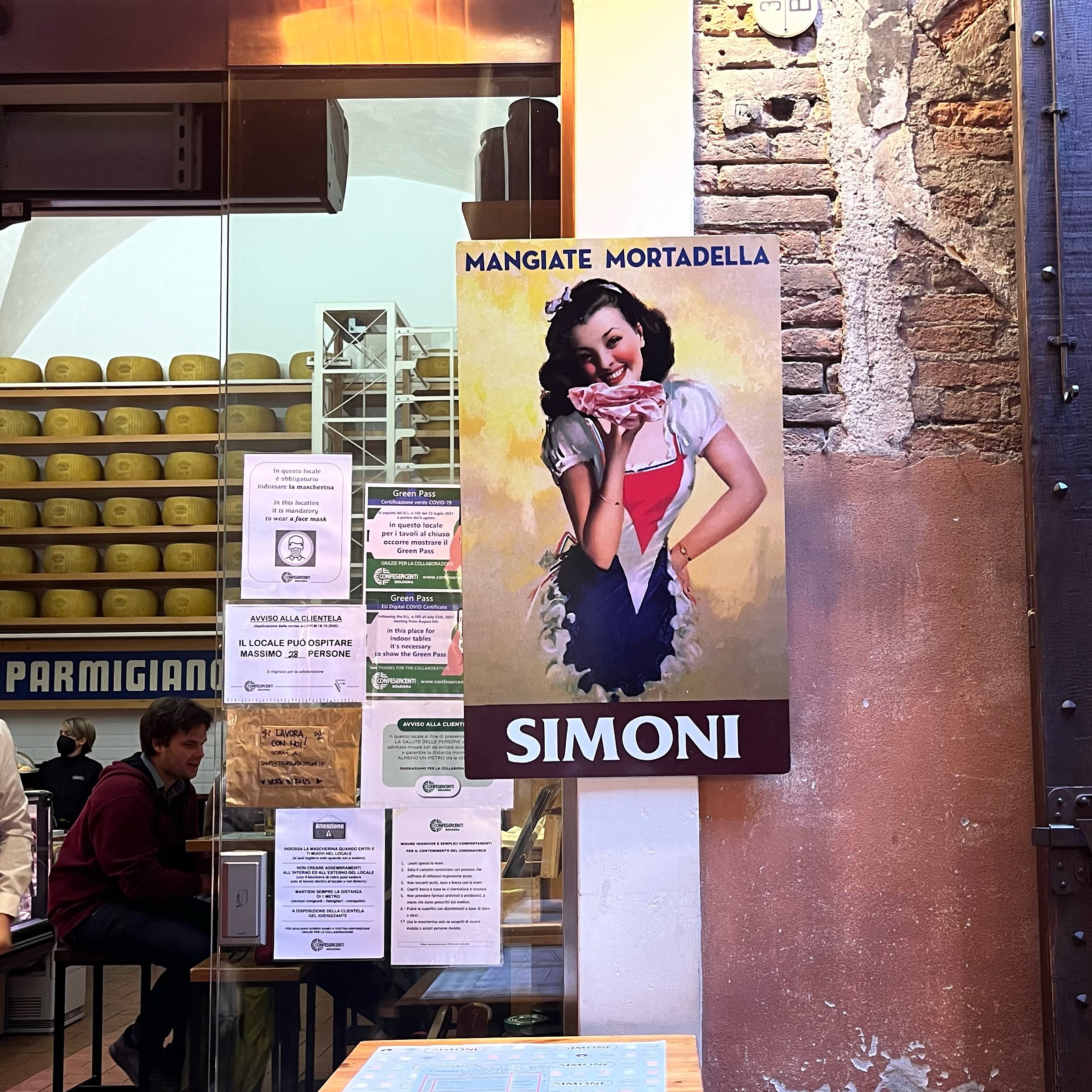
There is a wonderful ambience of food in the Centro Storico, everyone sits at tables in the slim streets and piazzas. There are so many places to choose from and Simoni pictured below is always packed. I did have a wonderful lasagne there once and that was when I discovered that the art of Bologna is at the table.
Spend time wandering around Piazza San Stefano (and visit the Basilica of Saint Steven) and a visit to the pilgrimage site of Santa Caterina. A Nun, Writer, Artist and Mystic, Catherine de Vigri was canonised in 1712. Visit the Corpus Domini in Bologna. A long walk up via the 600 archway porticos to the Sanctuary of Saint Luca, or otherwise just enjoy the ambience of aperitivo with the locals.
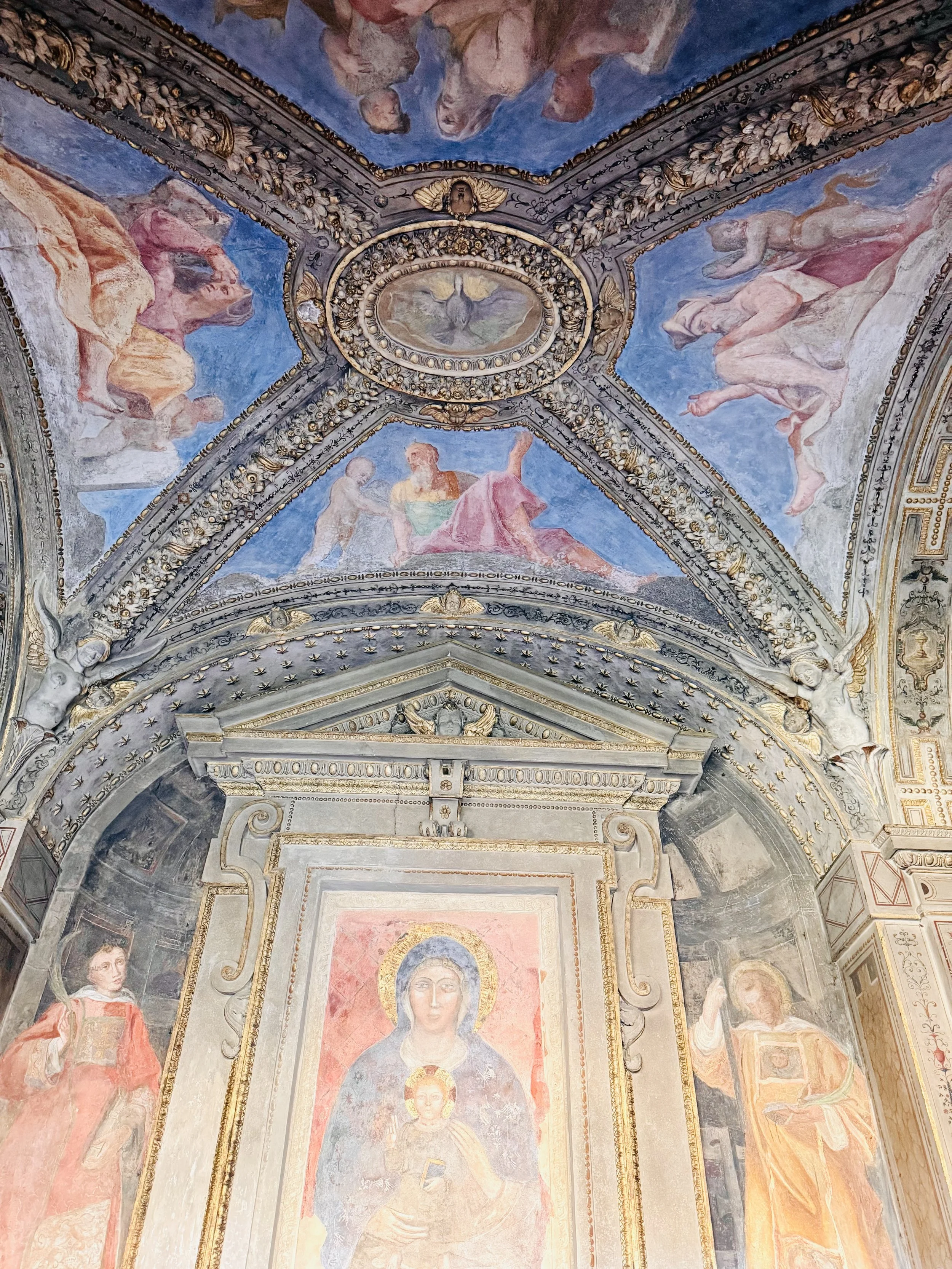
Basilica of Santo Stefano in Bologna, Italy
Over time I have caught the train from Venice (1.5hr) to Bologna and used it as a base and starting point to more travels in Emila Romagna. Close by is Modena, Parma and Ravenna (for the Byzantine Mosaics) and a special visit to the Basilica of San Vitale.
I have circled around to Liguria from Parma via Bologna and found myself in La Spezia and Genova. Or a trip into the Veneto to see Treviso, Venice, Padua is nice too. Take your time there is so much discover in this part of Italy.
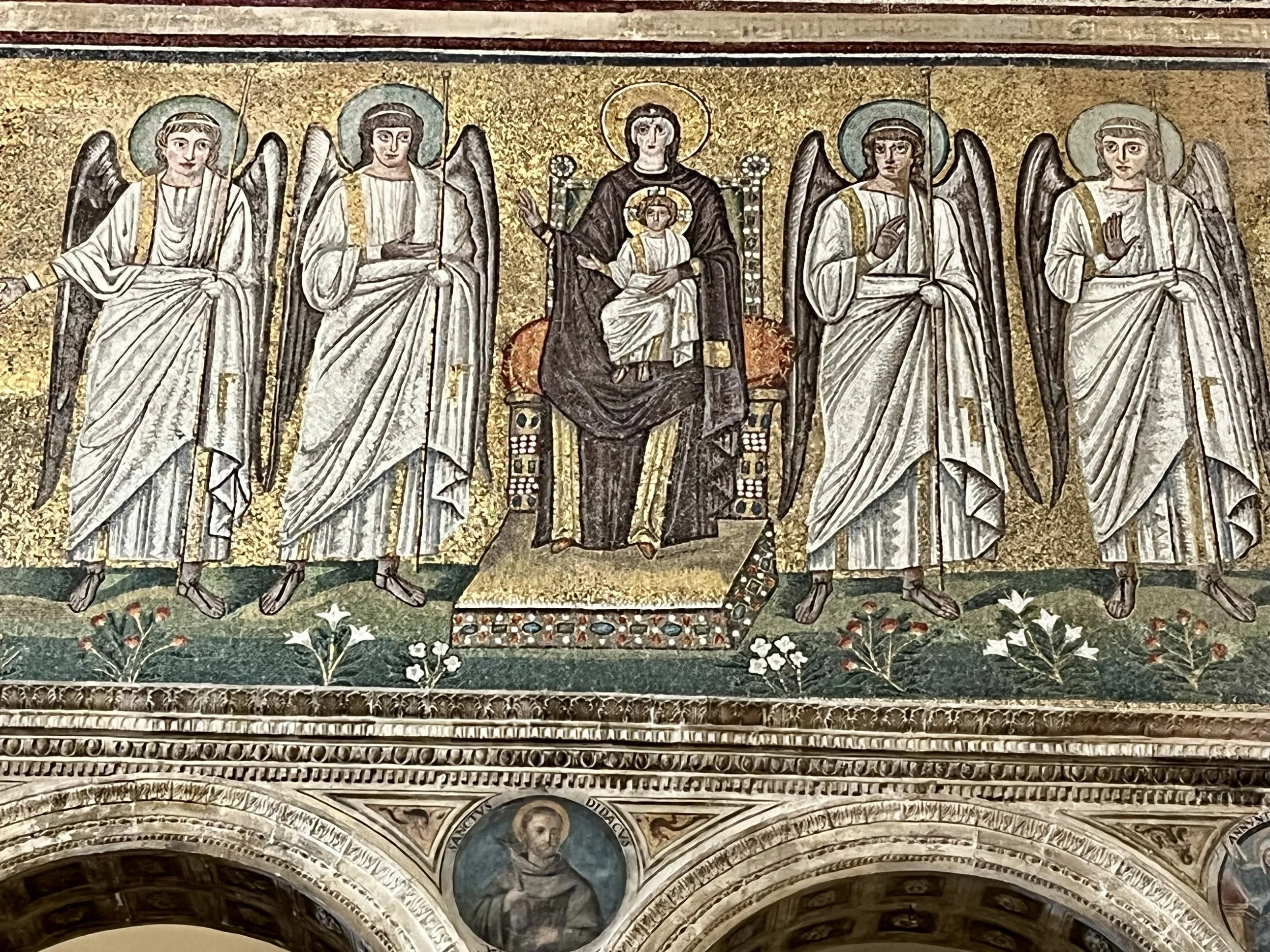
The Byzantine Mosaics of Ravenna - Basilica di Sant’Apollinare Nuovo
Shownotes:
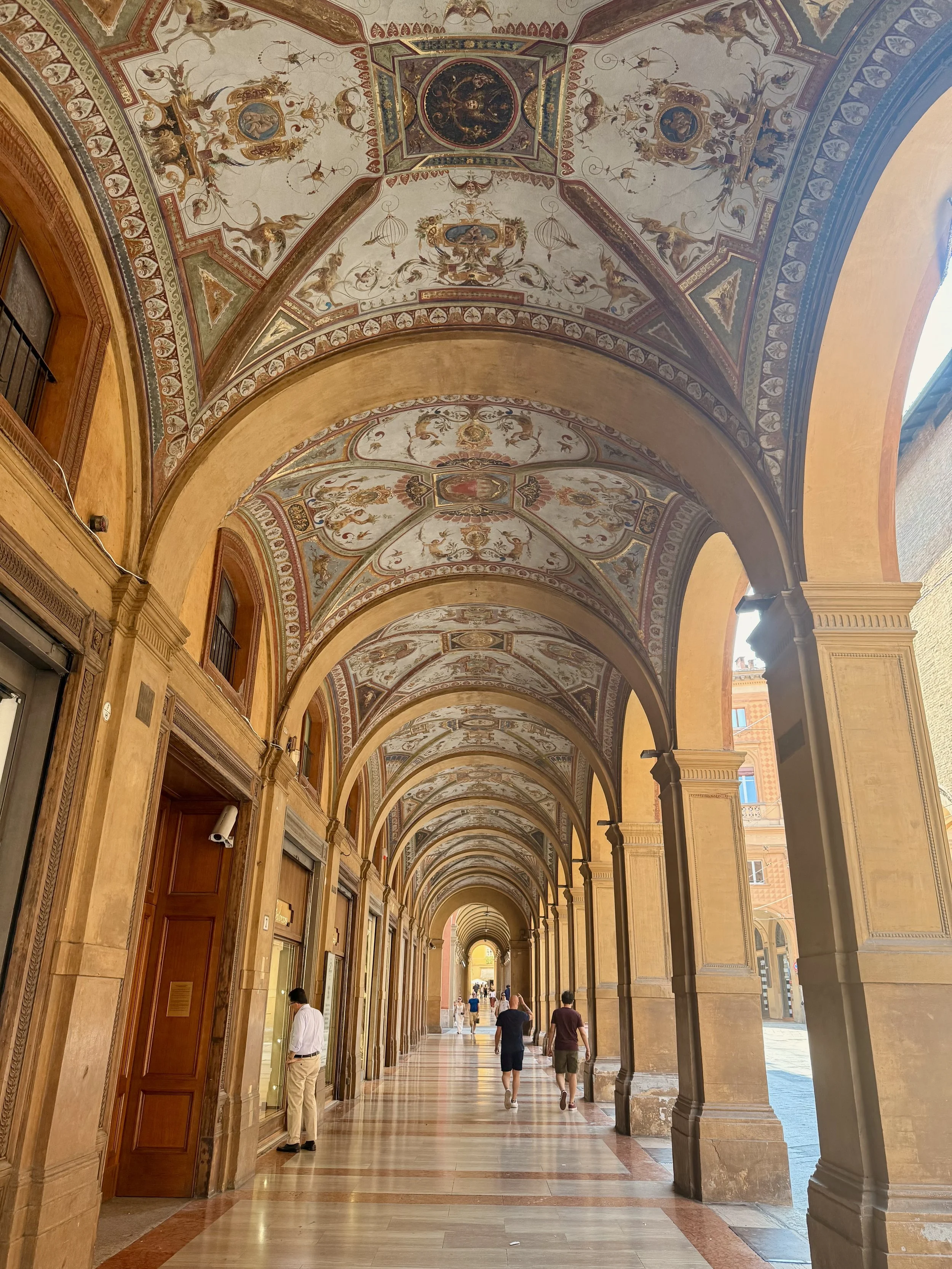
The National Art Museum of Bologna for the wonderful Must See Art -
Pinacoteca Nazionale di Bologna,delle Belle Arti 56 , 40126 Bologna
Read Katy Hessel’s book - The History of Art Without Men for the story of the artists Properzia de Rossi, Caterina de’Vigri, Elisabetta Serani, Lavinia Fontana.
This is beautiful synopsis of women at the end of the Renaissance period about their lives as artists. The chapter is called Painting Herself into the Canon c1500-c1700
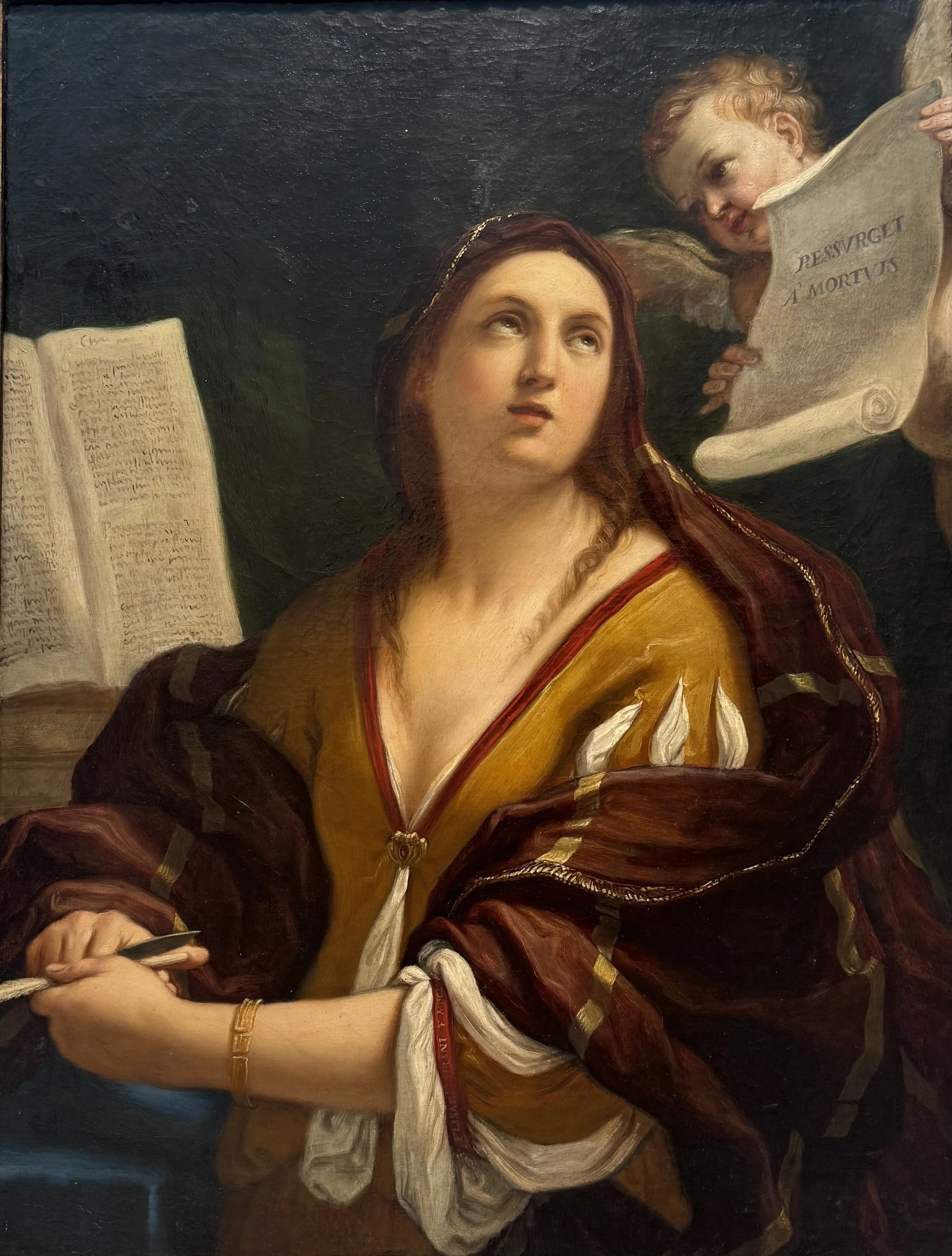
Elisabetta Sirani, Sibilla, 1660
“Bologna was unique in championing the professions of women. The home of Europe’s oldest university, which has supported female students since the thirteenth century, the city considered women artists integral to its development” - Katy Hessel, The Story of Art Without Men
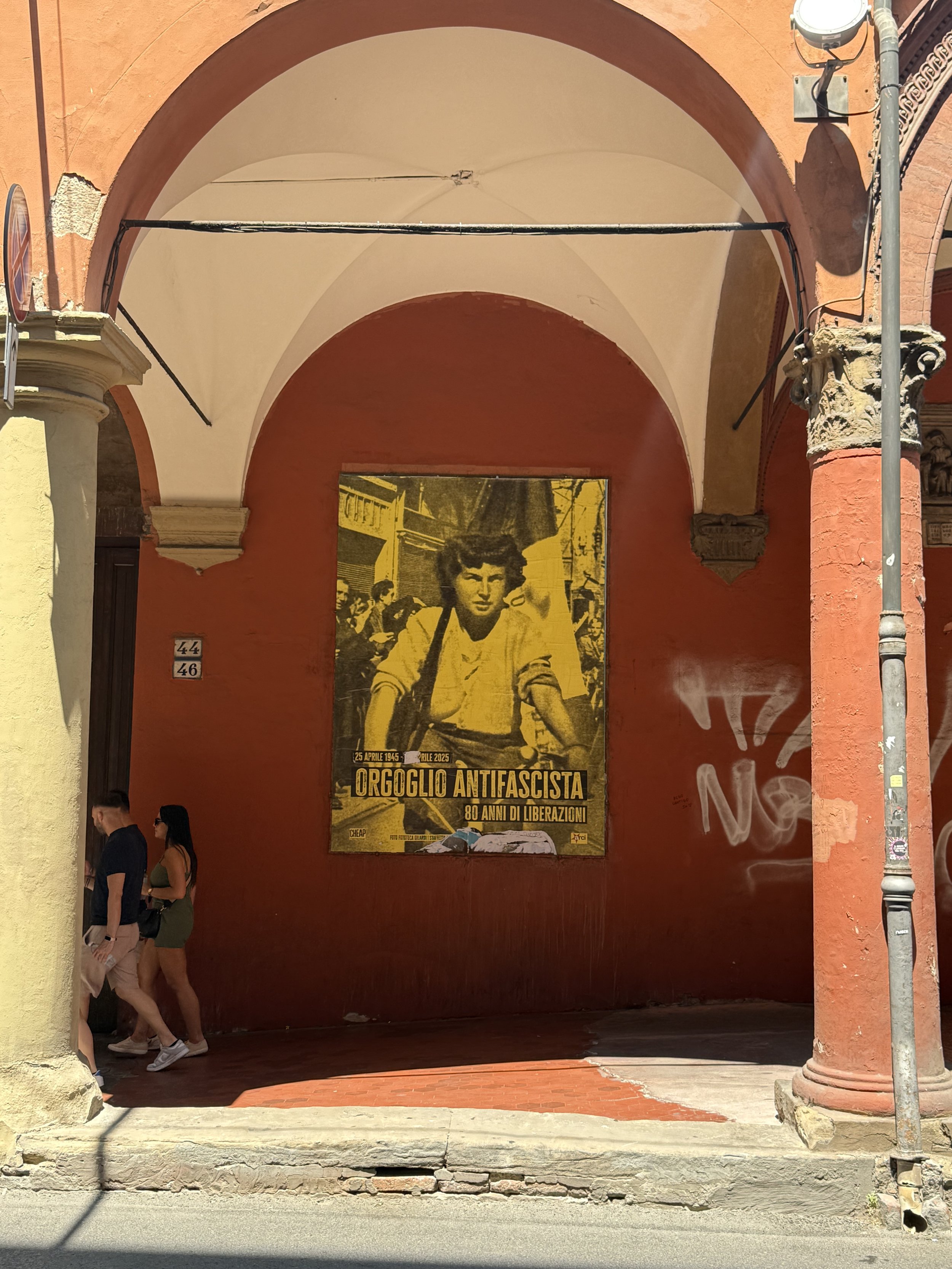
Bologna has the oldest University in Europe and has a great young feel to it closer to the university, some graffiti and art posters that symbolise the ambience and modernity of the city….