Episode 130: The Tarocchi Players - Renaissance Italy and the History of the Tarot
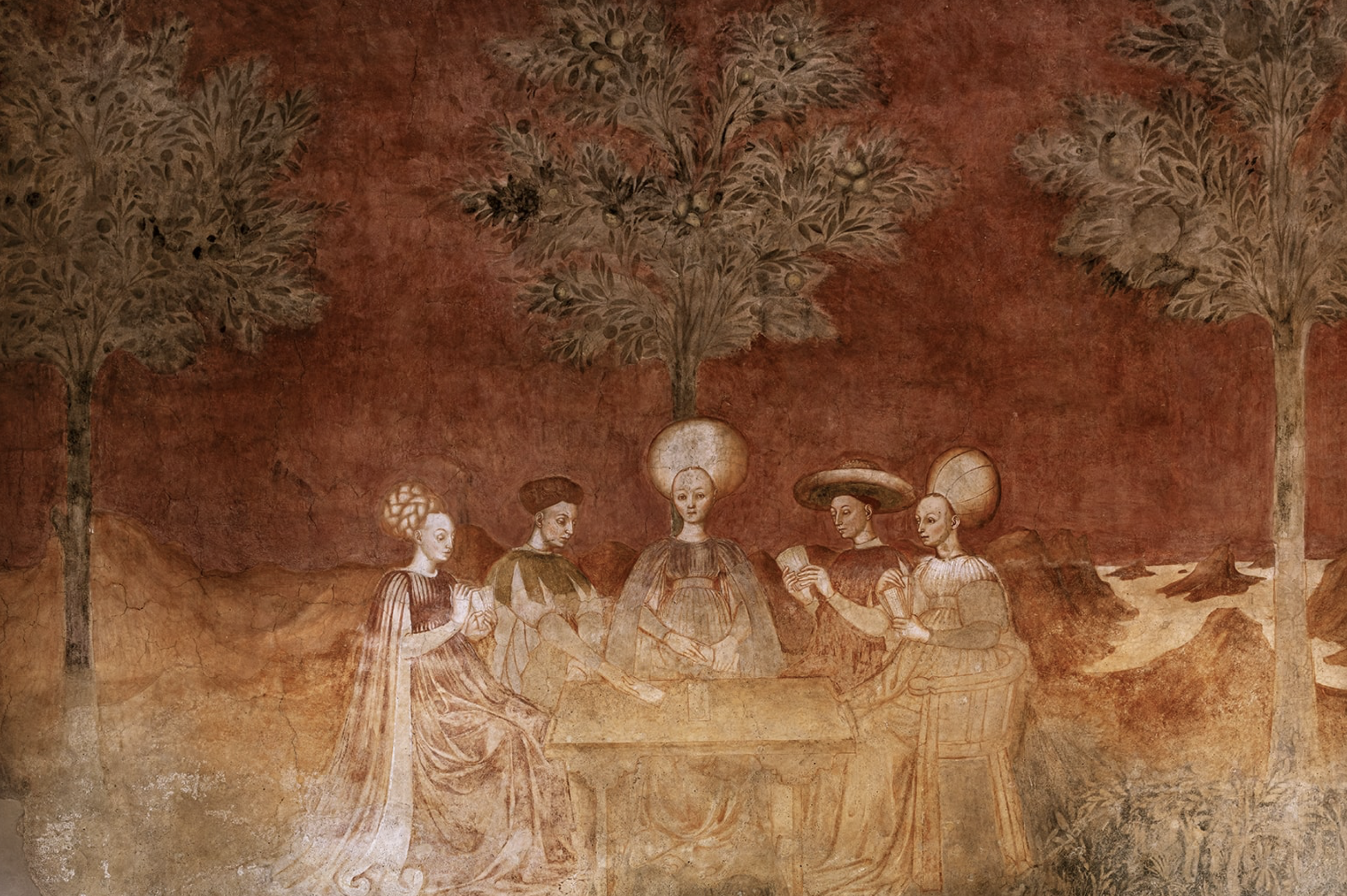
The Tarocchi Players - Palazzo Borromeo c1440, Milan Italy
Welcome to Episode #130:
Did you know that the roots of tarot have their beginnings in the north of Italy at the height of the Renaissance. The first playing cards emerged in the courts of the noble Milanese families and became a popular card game for entertainment and play.
The Visconti Sforza, Bolognese Tarochini and the Minchiate Tarot cards were commissioned by the aristocratic families to be hand painted and designed by expert artisans. Played as a game called 'carte da trionfe' the tarot was purely a trick playing game in the height of the Renaissance.
Today I discuss the Visconti and Sforza alliance in Milan, Cosimo de Medici patronising philosophers to transcribe the Corpus Hermeticum to Latin, the time of ‘Renaissance Magic’, the shift in art and philosophy in the 14th and 15th century, the move toward the mystical traditions and how the tarot eventually evolved into that of cartomancy, esoteric practice via secret societies and occult practitioners in England and France in the 18th and 19th centuries. To now be tethered to the mystery traditions and used as form of divination, fortune telling and spiritual practise.
I also share a few personal revelations about the tarot system along the way. And if you are in Italy it turns out there is some serendipity to this episode I discovered while writing my show-notes you can visit the Accademia Carrara in Bergamo (a quick train ride from beautiful Milano) for an exhibition that is on until June 2026, that covers the last seven hundred years of tarot. If only a patron would come calling to me!
How I would love to see this exhibition!
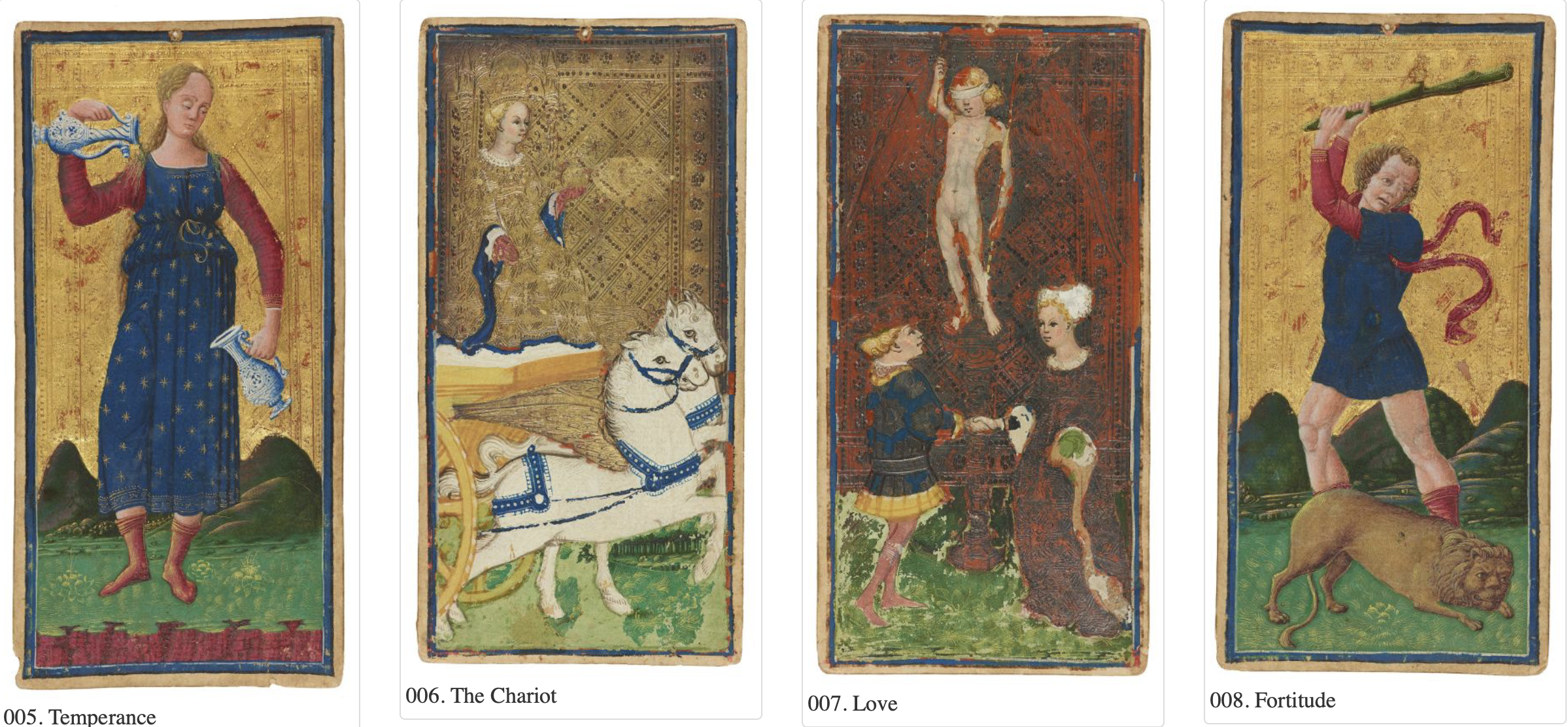
Images from the Morgan Museum & Library, New York
Shownotes:
Holistic Tarot: An Integrative Approach to Using Tarot for Personal Growth by Benebell Wen
Helenistic Astrology: The Study of Fate and Fortune by Chris Brennan
The House of Gucci - Film, 2021 based on the book - The House of Gucci: A Sensational Story of Murder, Madness, Glamour, and Greed by Sara Gay Forden
The Pinacoteca Art Museum, Brera - Milan
Accademia Carrara in Bergamo
The Castle of Crossed Destinies by Italo Calvino (Italian: Il castello dei destini incrociati)
Book Suggestion (I wish I had of read before I made this podcast):
Tarot Travel Guide: History of Mystery from the Renaissance by Morena Poltronieri (Author), Ernesto Fazioli (Author), Arnell Ando (Author, Translator)
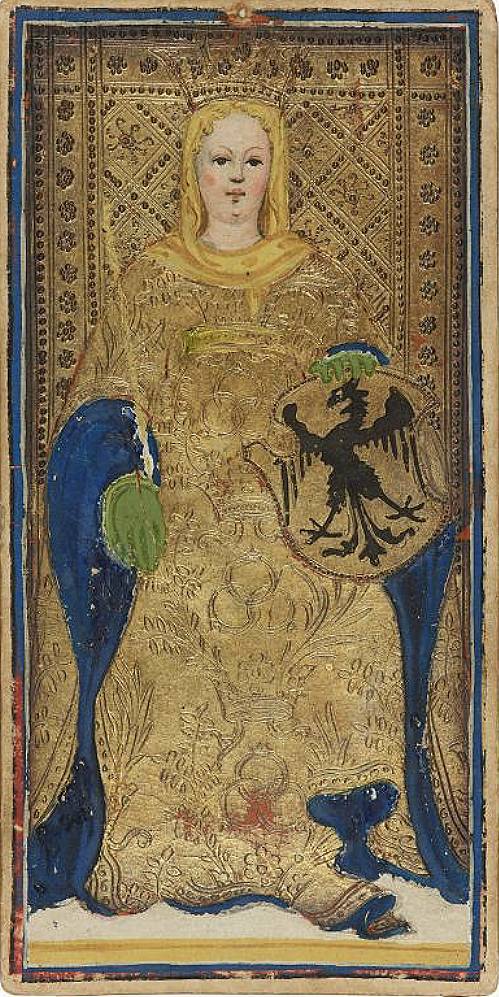
The Empress - Visconti Sforza Tarot, 15th Century, Milan
The Tarot cards can be found in Italy, America and the United Kingdom in The Pinacoteca Art Museum, Brera in Milan, The Morgan Museum in New York & The Accademia Carrara in Bergamo (currently exhibiting in Italy) & The Victoria and Albert Museum in England
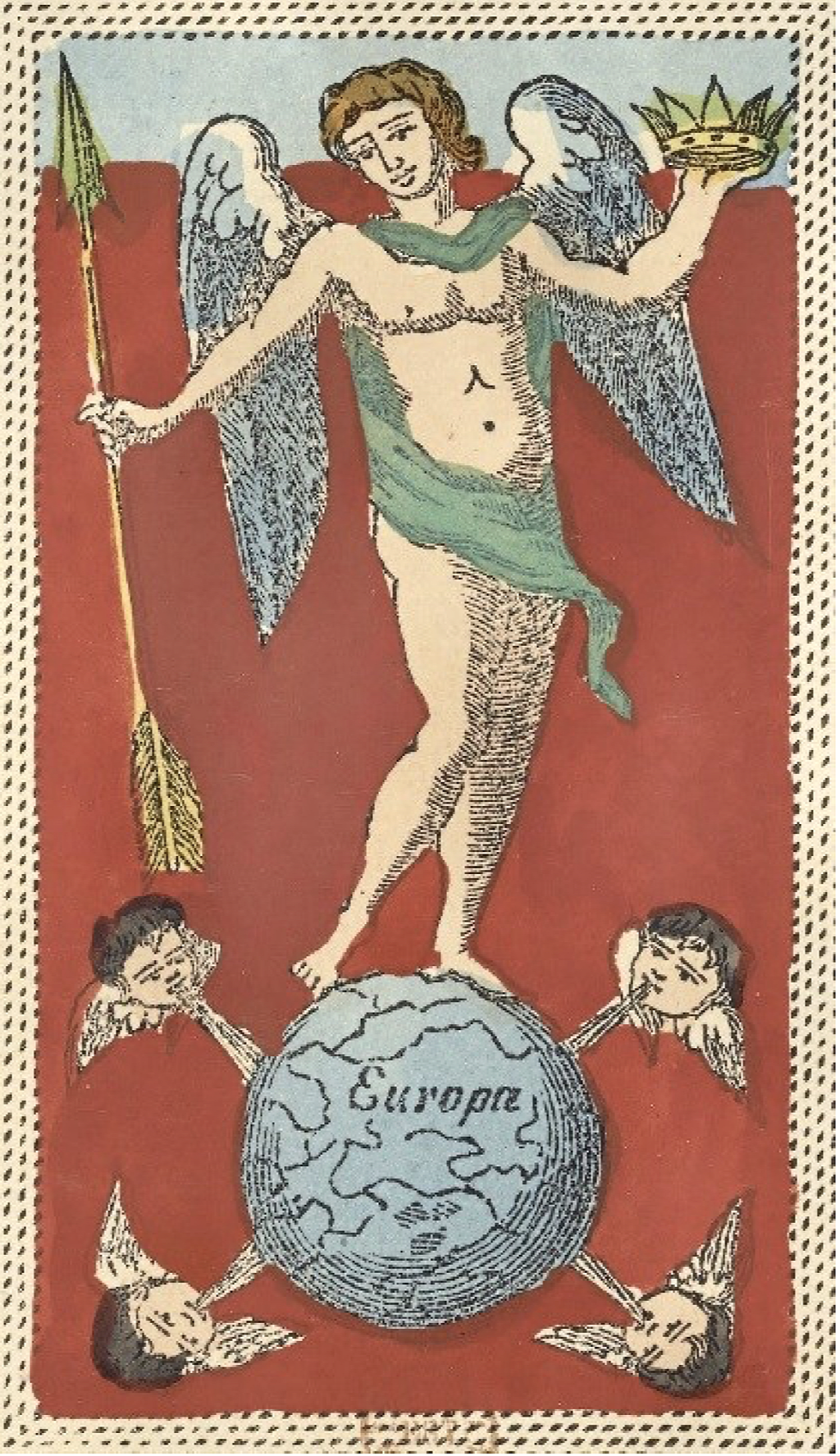
Florentine Minchiate Tarot - Revised Edition, 1860-1890
"Around the middle of the fifteenth century, not so long after the first written references in Europe to cards of any kind, an artist named Bonifacio Bembo painted a set of unnamed and unnumbered cards for the Visconti family of Milan"
Origins of Tarot, Seventy Eight Degrees of Wisdom: A Tarot Journey to Self Awareness by Rachel Pollack
The word Renaissance describes the rebirth of a new era. This period marks a time in Italy and history beginning in late 1300 until the 1600s. In Italy there was a cultural flowering of artists and great thinkers that were creating a new paradigm focusing on Humanism, Naturalism, Realism, and philosophy. At this point, the creation of art and architecture not only represented political power and beauty, but identity, theology, politics and philosophy. This time in art history laid a foundation for the future of western art establishing a humanistic and natural approach to the visual aesthetic of the art and sculpture in Italy. For example - the powerful work of Michelangelo’s sculpture, ‘David’ (1501-1504) created at the height of the Renaissance period in Florence is symbolic of this moment, and stands outside of the political headquarters, the Government of Florence - the Palazzo Vecchio.
Many iconic artworks were created in this period by Leonardo da Vinci, Michelangelo, Rapheal and Titian and earlier in the Renaissance, Fra Angelico, Sandro Bottocielli and Donatello - many that we flock to Florence to see in the Uffizi and the Accademia today. Florence of course being the cradle of Renaissance art in Italy and the world.
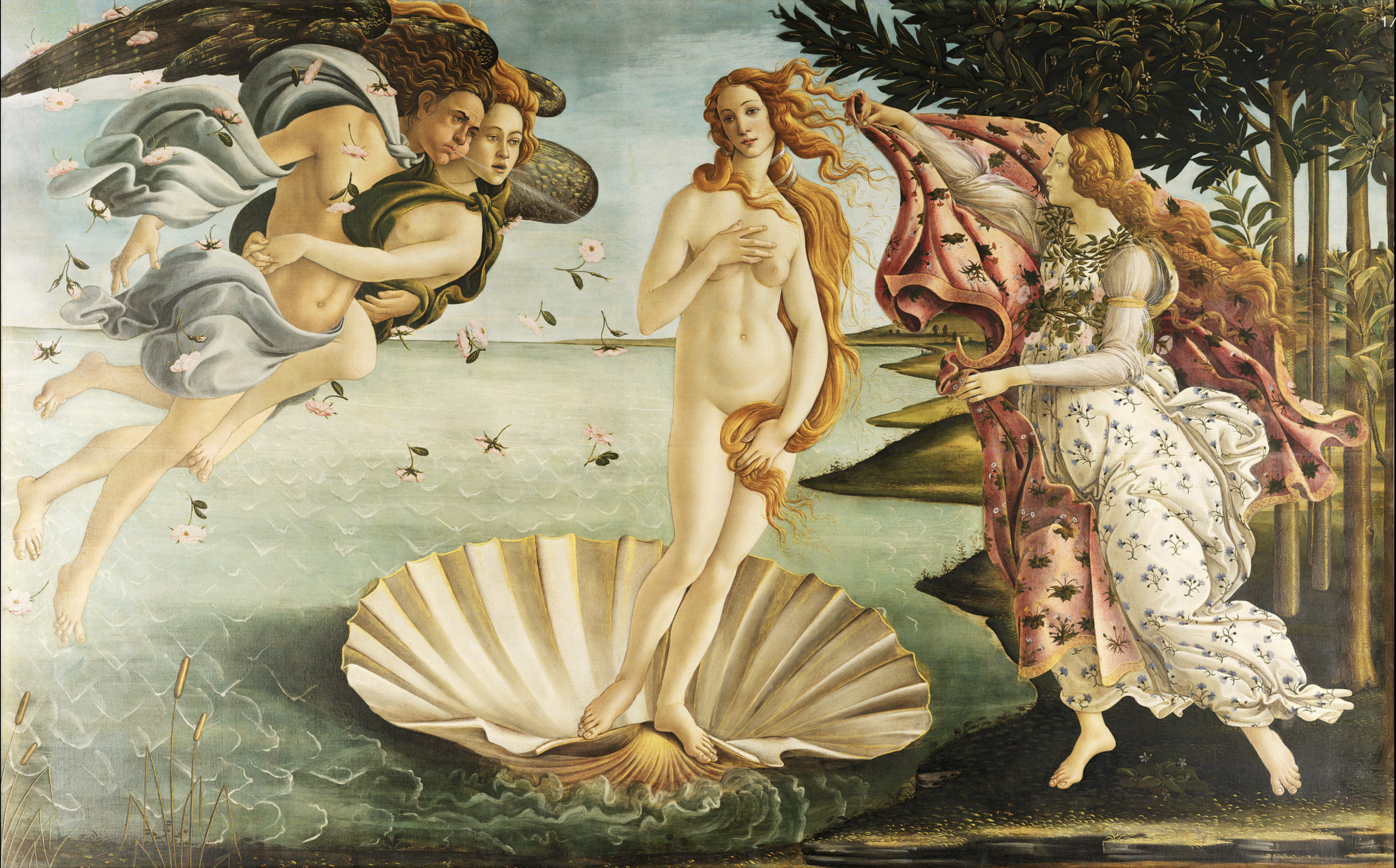
The Birth of Venus - Sandro Botticelli, 1484-1486, Uffizi Galleries, Florence
It was in the middle of that great time of rebirth that is the Renaissance that the playing card game Tarocchi quickly became popular in the grand courts and castles of the most noble families as a means of entertainment and fun. The card trick taking game was called ‘carte da trionfe’.
Between 1442-1447 Filippo Maria Visconti commissioned one of the first of many colourful decks to be hand painted and designed with historical medieval and mythological themes. As any scholar of medieval books and manuscripts knows there must be patronage for this kind of development. Yet at the same time this creation was a reflection of power and certainly symbolic of status in society and art at the time. The oldest deck of cards is to be the Visconti di Madrone card deck.
Bianca Maria Visconti and Francesca Sforza were the first to add to the general four suits the extra cards that were considered higher in context and value, they were called trumps or “triumphs” or in Italian they were “trionfi”. This popular card game was called the Game of Tarot - Carte da Trionfe.
The triumph cards were designed with allegorical stories, virtues, classical gods, mythology, folklore, religion and abstract concepts. Likely we could call them symbols and archetypes now.
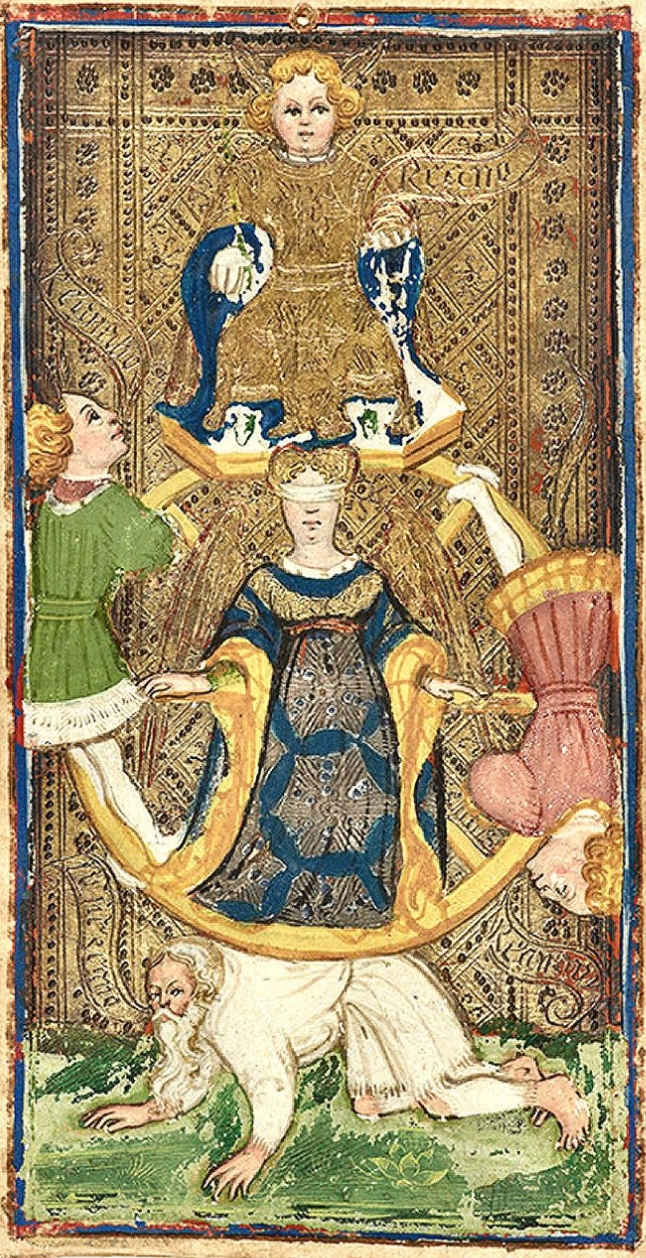
The Wheel of Fortune, Visconti Sforza Tarot - 15th Century Italy Playing Cards
They used images of clergy, peasants, aristocracy and merchants to reflect the varied people of society to symbolise the meaning of the cards. We know the triumph cards as the major arcana today in tarot language. They were luxurious, gold leaf and hand painted cards designed with expertise and serious craftsmanship that were considered beautiful objects of art and play.
And to note, in tarot today the minor arcana or suits still use the Italian style of swords, cups, coins and batons that we call pentacles and wands now, that reflect the four elements. Classically a deck of playing cards in the 21st century is the diamonds, hearts, clubs and spades as the four suits which is based on the French playing card system.
I like that the Queens, kings, Pages and Knights are still to do this known as the Court Cards in the tarot system. A true legacy of their Italian heritage.
The Visconti Brera Brambilla and the Visconti Sforza tarot decks are said to be a creation of the Visconti Sforza alliance. These are the oldest surviving tarot cards that can be found in galleries and museums in Europe, the United Kingdom and in America. Carte da Trionfi was popular and would soon ripple out to other wealthy cities in the north of Italy before heading south to Campania and Sicily and on to the Mediterranean countries.
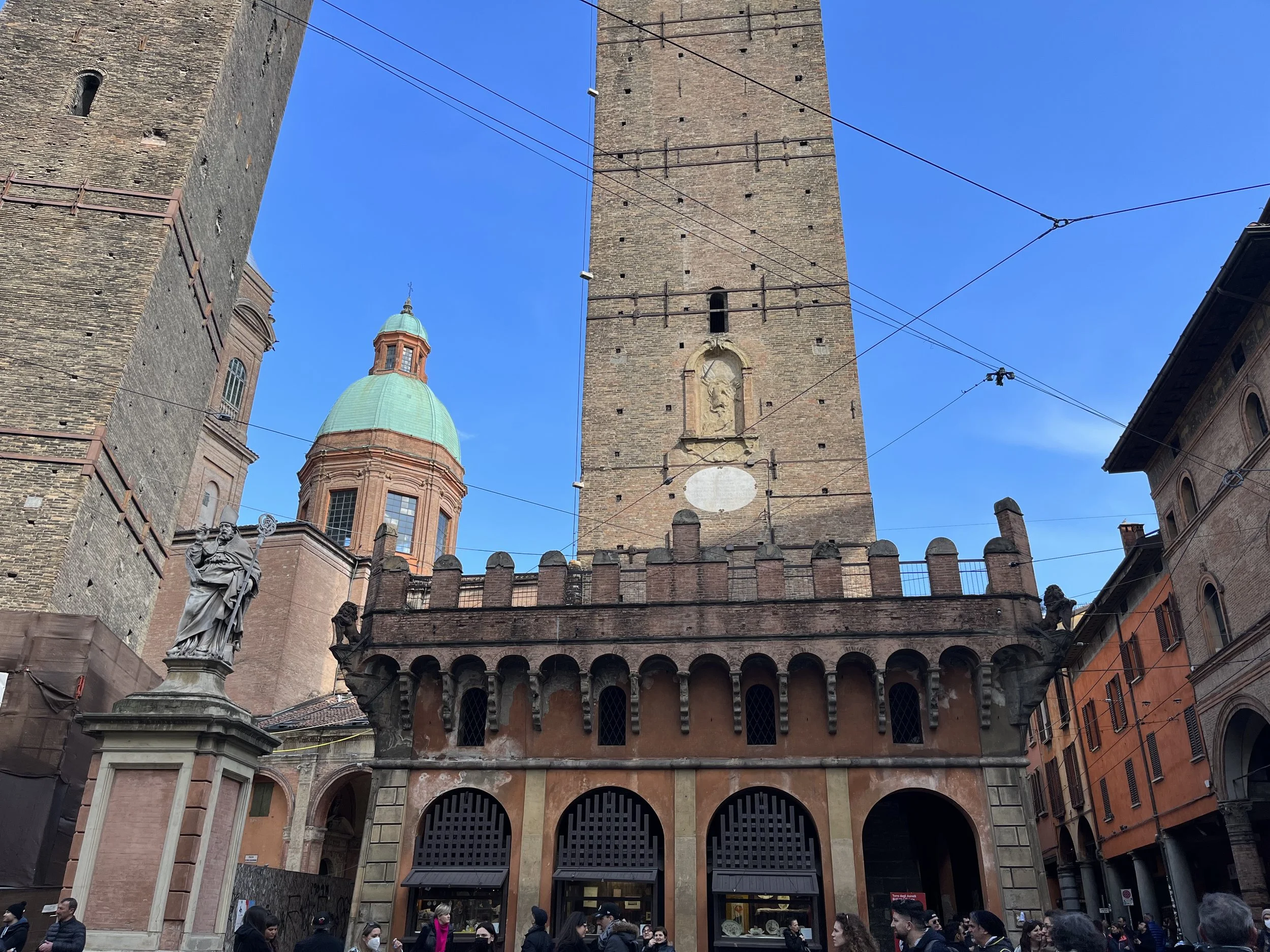
Bologna in Emilia Romagna is a medieval city in the north of Italy of beauty and heritage….
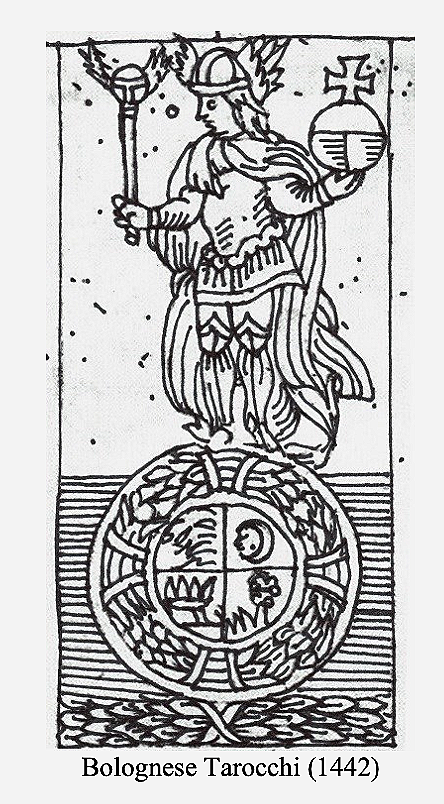
These cards mark the beginning of the colorful imagery of tarot and what would come soon after in Italy in other wealthy cities like Bologna and Florence who too would birth their own creations. In Bologna, it was the Tarocco Bolognese that was created in the middle of the 15th century to play the Tarochini game. This was a tactical trick taking card game. The Bolognese tarot would influence Tarocco Siciliano, the first painted decks in Sicily, and in Florence, the Minchiate Fiorentine that dates back to the early sixteenth century. The Minchiate game was unique at the time as it had not only the trump cards as a major arcana but included the four virtues - hope, charity, faith and prudence and included the twelve astrological signs as part of the symbology. Things were beginning to shift in the archetypal meaning and language of the tarot cards.
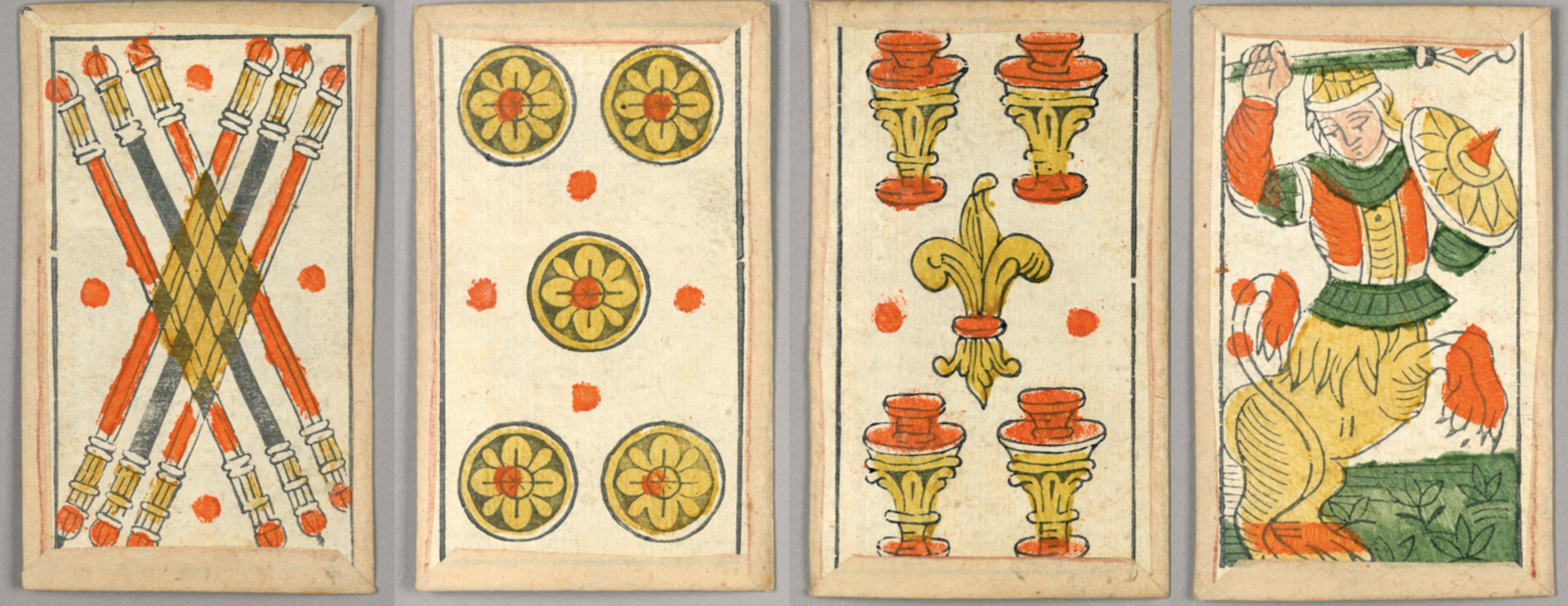
Minchiate Tarot, 18th Century, Florence (reproduced editions based on the original 16th Century card game) - Image from the Smithsonian Museum Digital Archives
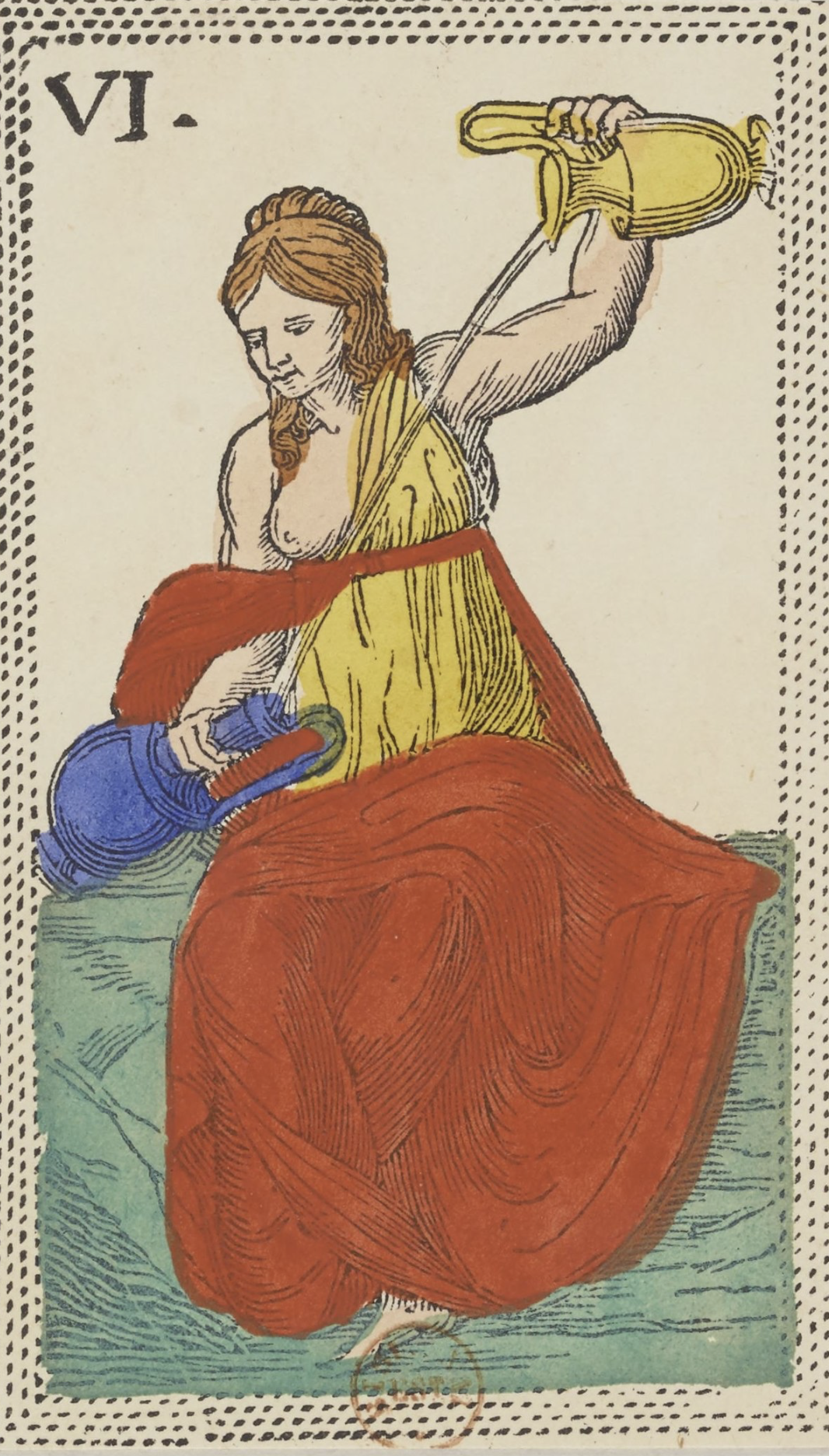
La Temperenza - Temperance from Florence Italy
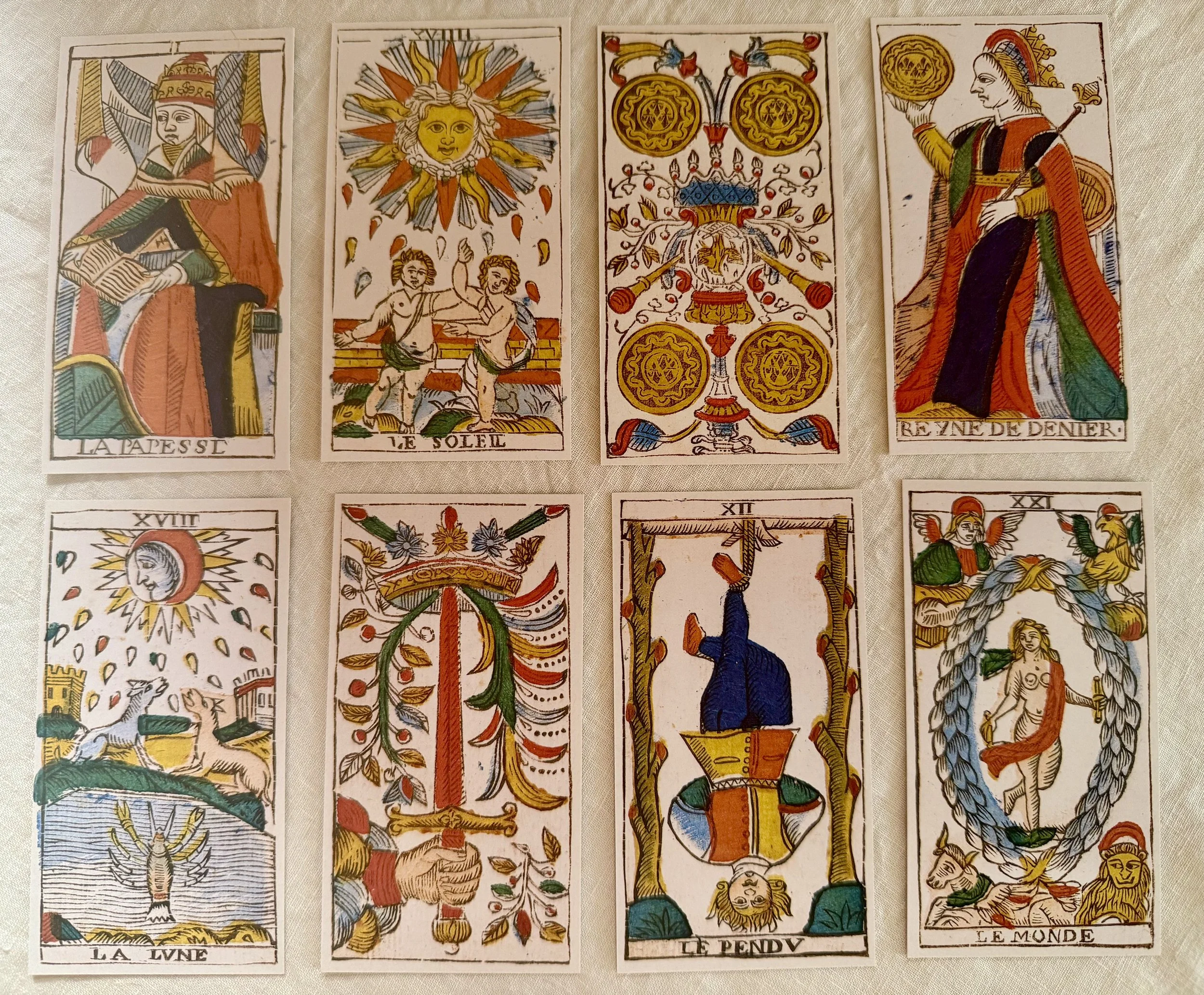
Tarot - Claude Burdel 1751 based on the Tarot de Marseille ( I love the Mediterranean colours of this deck and the illustration) - the original Edition is preserved in the Museum of European and Mediterranean Civilisations in Marseille France and is based on a model of The Tarot of Marseilles.
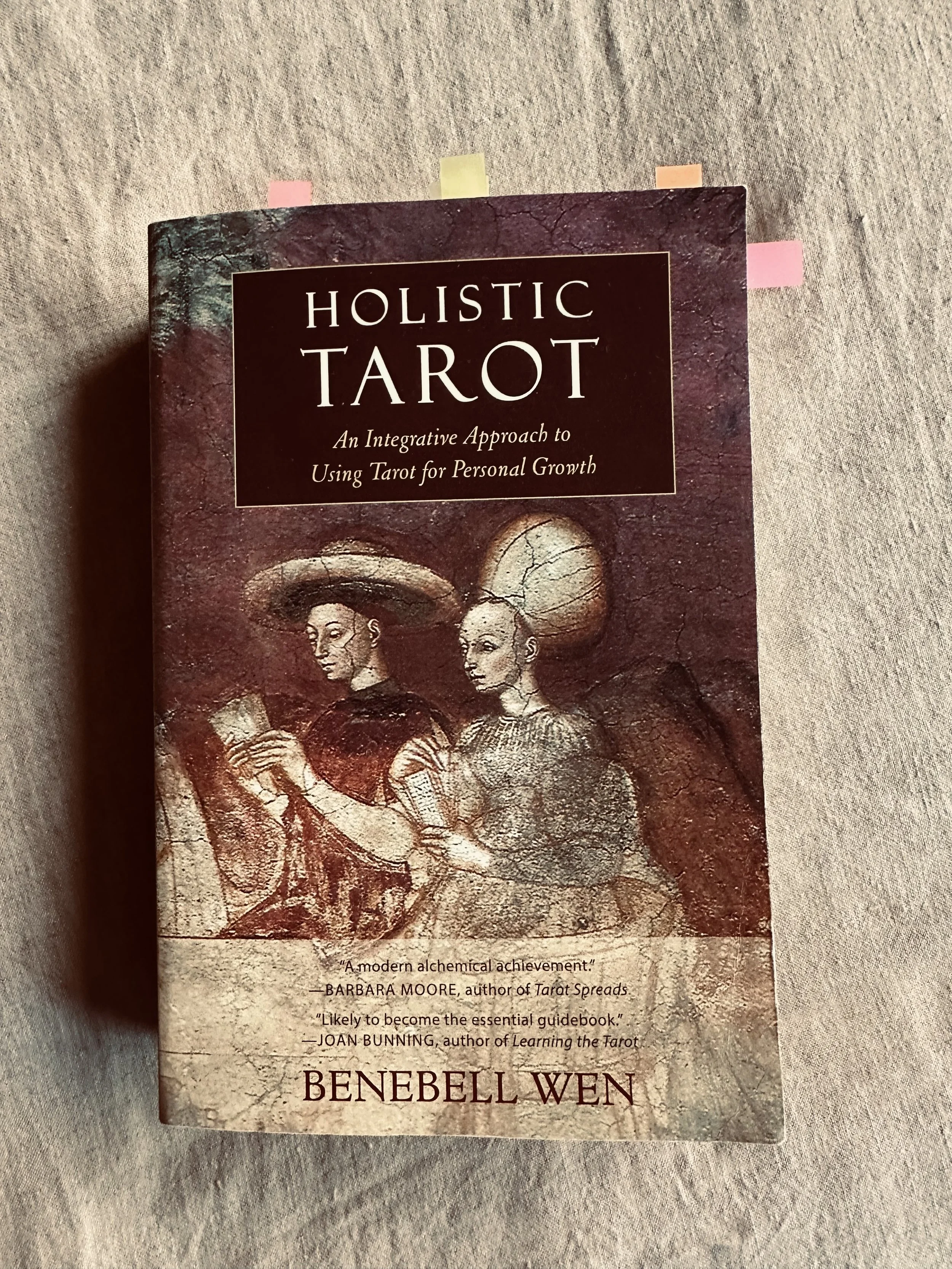
The image of The Tarocchi Players would took me on a journey to understanding the history of Tarot in Italy.
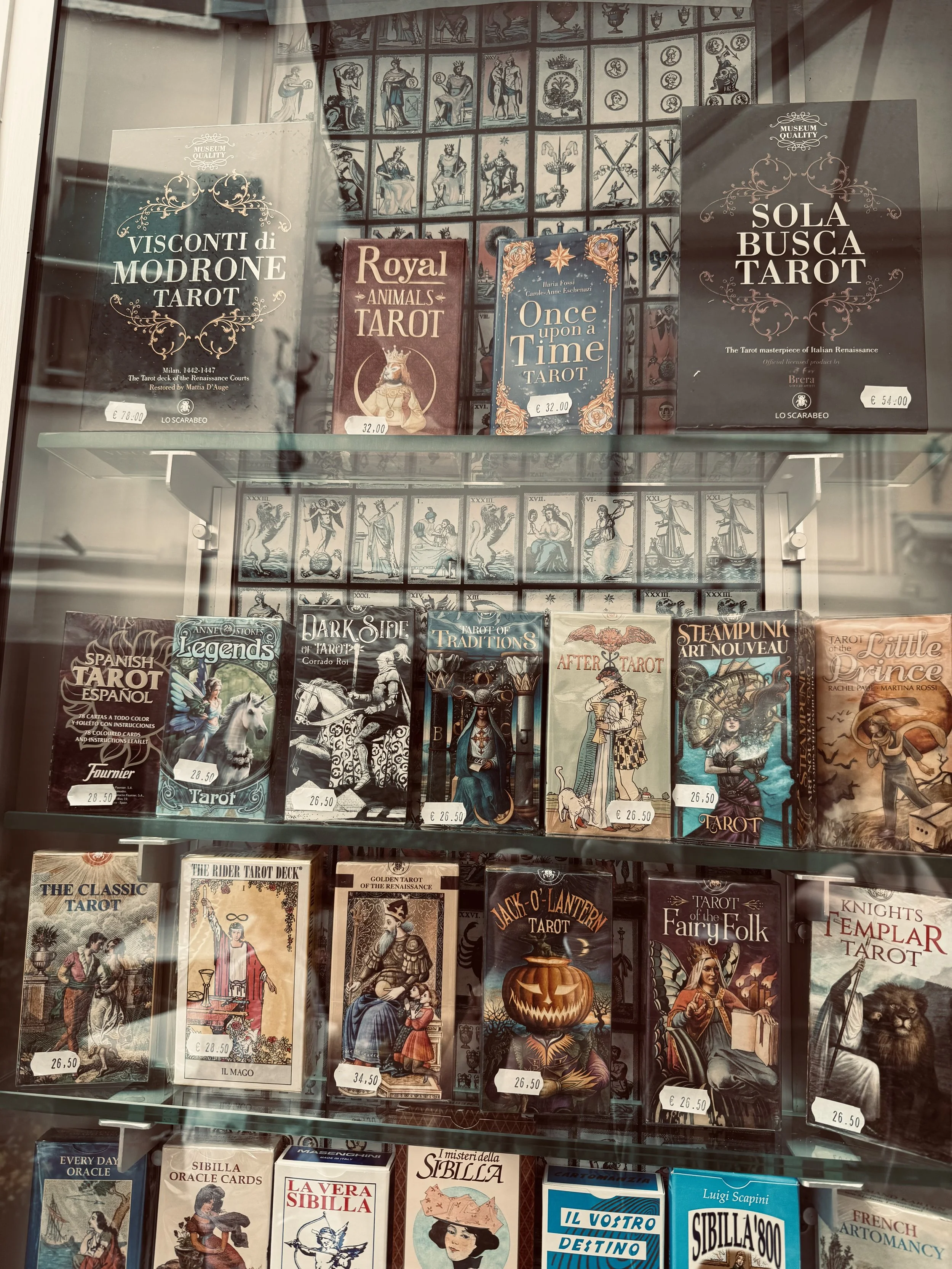
Walking past a bookstore in Lake Garda Italy gave me a sense that I needed to know about the history of tarot in Italy